
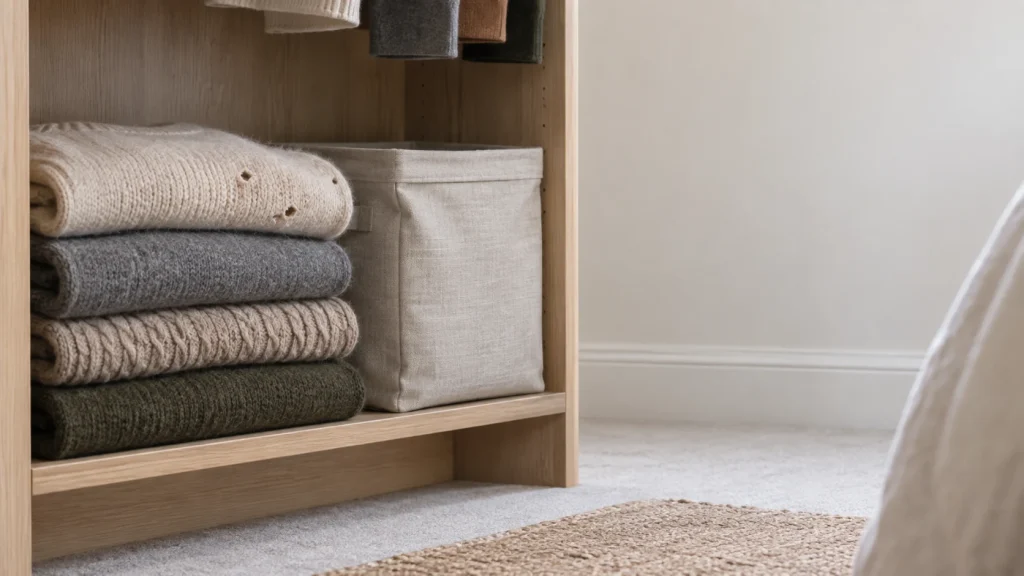
Finding fresh holes in clothes, blankets or stored textiles is frustrating, especially when you thought the problem had already been dealt with.
Clothes moth damage often keeps coming back because the visible moths are only part of the issue. The real cause is usually hidden larvae feeding quietly in wardrobes, drawers, loft storage or undisturbed fabric piles.
Why the damage appears to keep coming back
Adult clothes moths are easy to notice when they flutter out of a cupboard or across a bedroom wall, but they are not the stage that eats fabric. The damage is caused by larvae, which need natural fibres and quiet conditions to feed and develop.
This is why repeat damage can feel confusing. You may remove the moths you can see, clean a few items and assume the problem has gone. Meanwhile, larvae may still be hidden in seams, folds, storage boxes, carpet edges, old blankets, wool rugs or the underside of furniture. If even a small number remain, the cycle can continue.
Stored fabrics are particularly vulnerable because they are often left untouched for weeks or months. Clothes moths favour dark, still spaces where wool, silk, fur, feathers or mixed natural fibres are available. Items with traces of sweat, skin cells, food marks or hair can be even more attractive because they provide extra nutrients.
The first signs are not always obvious holes. You may notice thinning patches, loose fibres, webbing, gritty debris, shed larval skins or small bare areas on rugs and upholstery. In some cases, people only realise the problem is active when they take seasonal clothing out of storage and find several items damaged at once.
Common hiding places in wardrobes, lofts and storage
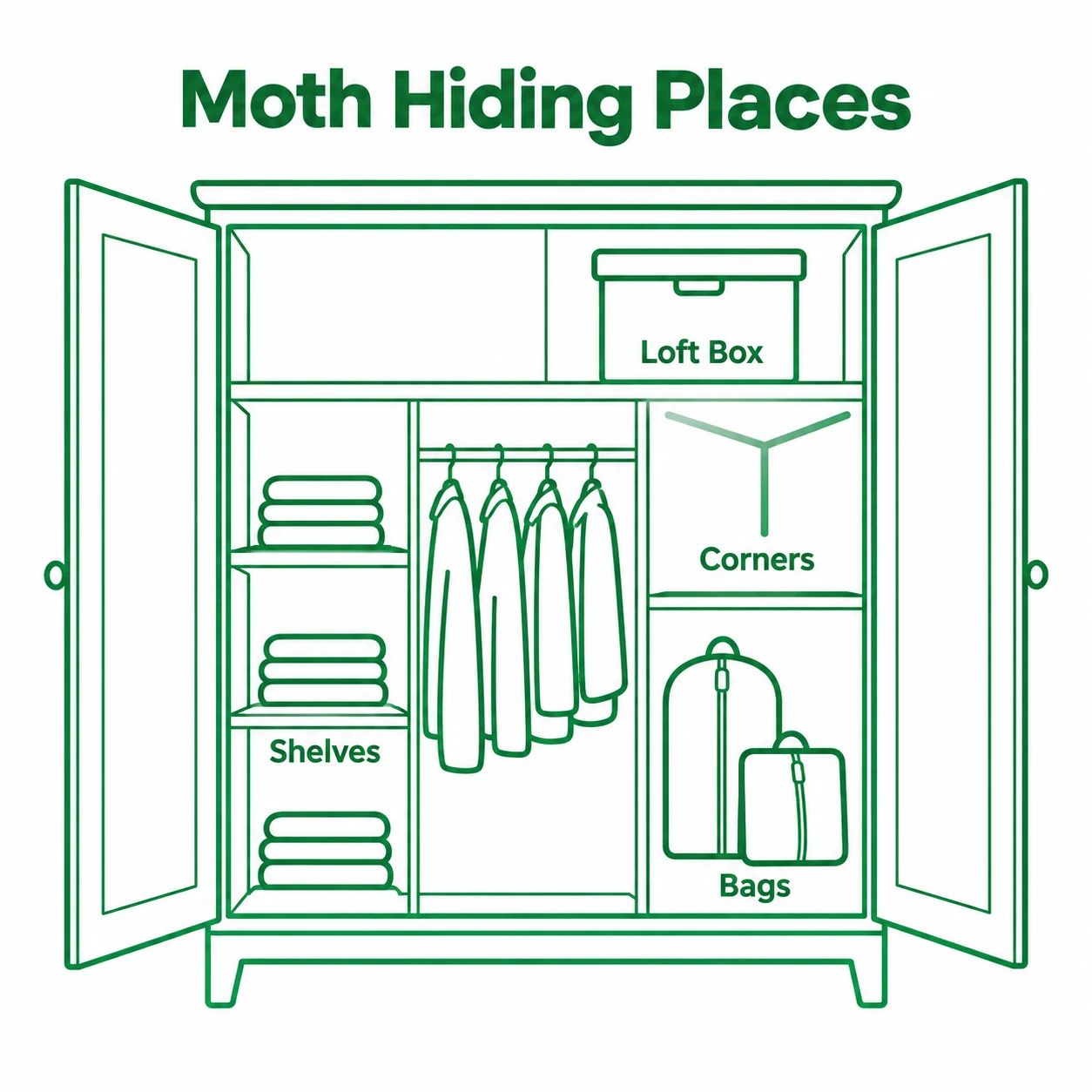
Clothes moth larvae prefer places that are rarely disturbed. A clean looking room can still have an active issue if the source is tucked away behind stored items or inside fabric that has not been moved for some time.
Useful places to check include:
- Wool coats, suits, jumpers and scarves at the back of wardrobes
- Blankets, throws and spare bedding in storage bags or boxes
- Rugs, carpet edges and areas beneath heavy furniture
- Upholstered chairs, fabric headboards and soft furnishings
- Loft storage, especially bags of clothing or inherited textiles
- Drawers containing natural fibre garments that are rarely worn
- Old bird nests or animal materials near roof spaces, where relevant
Inspection matters because the obvious damaged item is not always the original source. For example, a jumper in a drawer may show holes, but larvae could also be present in the wardrobe carpet, a stored blanket nearby or a wool rug in the same room. Treating only the item you found can leave the wider activity untouched.
If you are comparing clothes moths with other fabric pests, professional identification can also prevent wasted effort. Carpet beetle larvae can cause similar damage, but their behaviour and treatment focus can differ. Sykes Pest Control GA4 covers both issues through its carpet beetle and moth treatment service, which is useful when the exact pest is not yet confirmed.
Why cleaning alone may not solve it
Cleaning is an important part of moth control, but it may not be enough on its own if larvae are established in several hidden areas. Vacuuming, washing and sorting can reduce the food source and remove some insects, yet eggs and larvae can remain in seams, cracks, carpet edges or untreated stored items.
Another common problem is partial treatment. A homeowner may wash a few damaged clothes but leave nearby storage bags, rugs or drawers untouched. Clothes moths do not respect neat categories. If suitable fabric is close by, activity can spread from one area to another.
Storage choices can also make repeat damage more likely. Plastic boxes and garment bags are helpful only when items are clean, dry and properly sealed before storage. If larvae or eggs are sealed inside with wool or cashmere, the container can become a protected feeding area. The same applies to vacuum bags if infested items are packed away without checking and cleaning first.
There is also a timing issue. You may not see immediate new holes, because larvae feed gradually. Damage can become obvious later, after the infestation has been developing quietly. That delay often makes it seem as if moths have returned from nowhere, when in reality they were never fully removed.
For practical prevention steps you can take at home, Sykes Pest Control GA4 also has a guide on how to get rid of clothes moths, which sits well alongside a proper inspection when the problem is persistent.
How to inspect stored fabrics properly
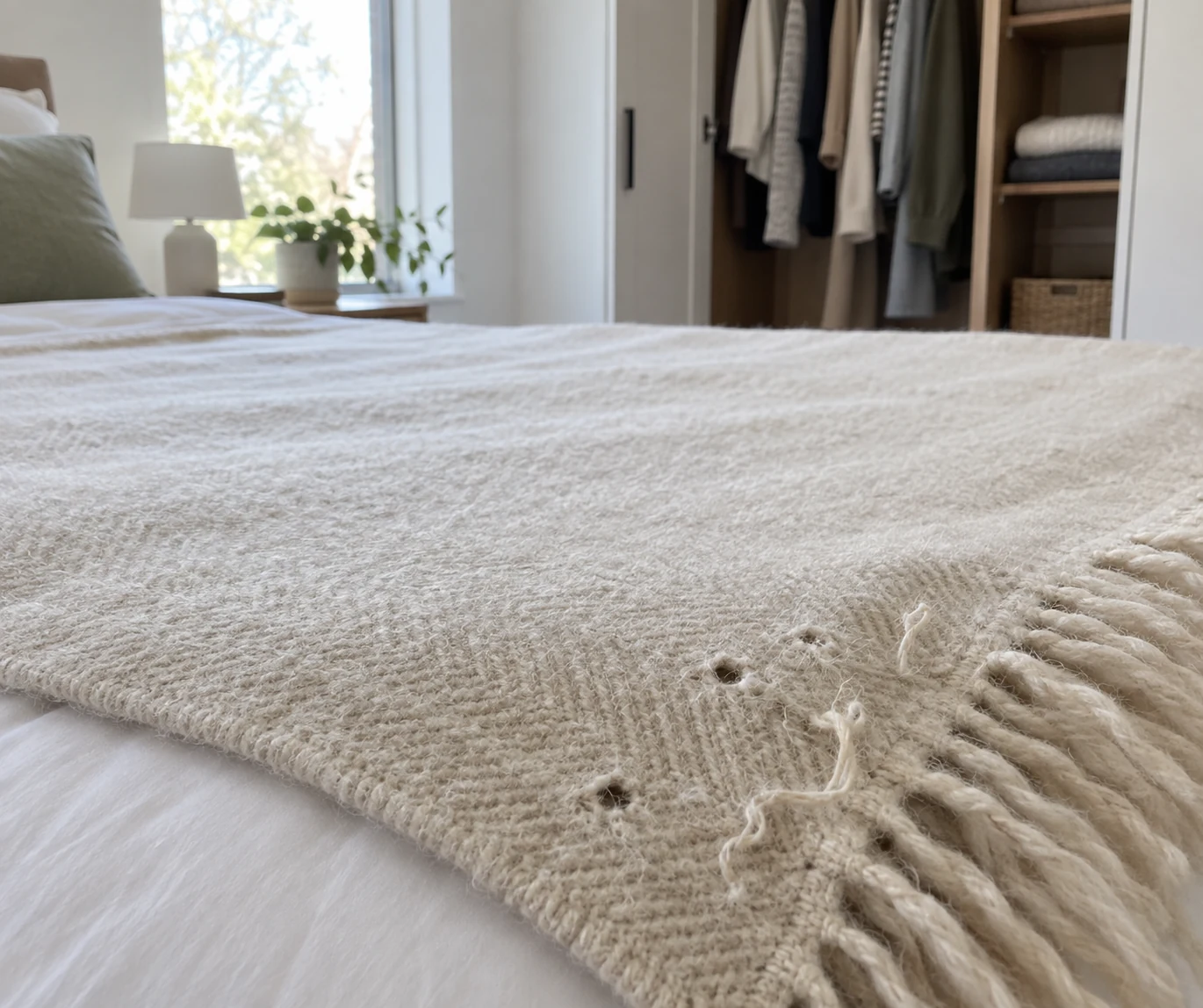
A good inspection is methodical. Start with the room where damage has been found, then work outwards. Empty wardrobes and drawers rather than glancing inside them. Check each item in good light, paying close attention to folds, cuffs, collars, linings, pockets and seams.
For stored textiles, open every bag or box. Look for larvae, webbing, shed skins and dusty debris. Do not assume that sealed storage is safe unless the items were clean and pest free when packed away. If several items show damage, keep them separate from unaffected fabrics until they have been dealt with.
Vacuum slowly around skirting boards, carpet edges, wardrobe bases and beneath furniture. Use the crevice tool where possible. After vacuuming suspected areas, empty the vacuum contents outside into a sealed bag. This reduces the chance of moving eggs or larvae back into the home.
Wash or dry clean affected garments according to their care labels. Heat, careful laundering and professional cleaning can help deal with insects on individual items, but delicate fabrics need the right approach to avoid further damage. Freezing may be suitable for some items if done correctly, but it must be thorough and the fabric must be protected from moisture.
Make a simple note of where damage is found. If holes appear in multiple rooms or in both clothing and carpets, that is useful information for a technician. It helps build a clearer picture of where the activity is centred and whether the issue is localised or more widespread.
When professional moth treatment is worth considering
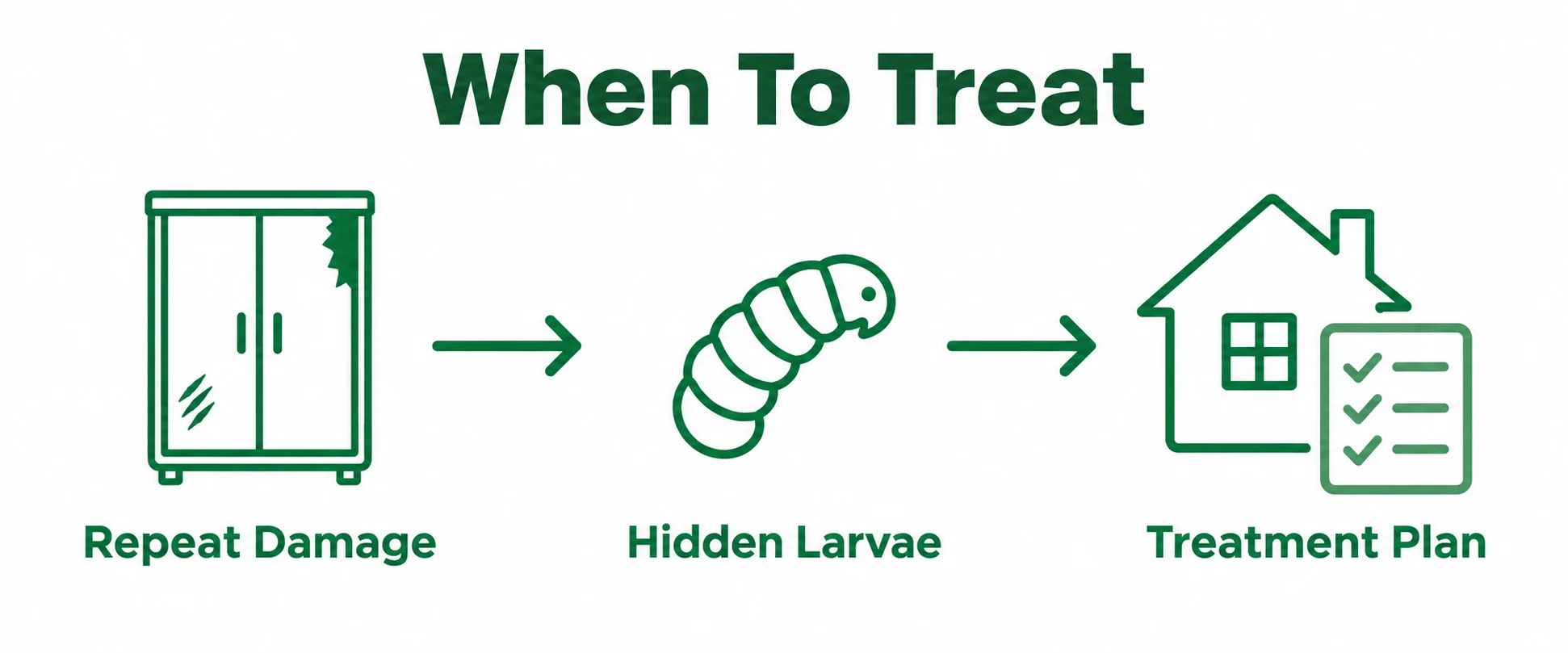
Professional help is worth considering when damage keeps returning, when several storage areas are affected or when you cannot find the source. It is also sensible if valuable textiles, wool carpets, upholstered furniture or large wardrobes are involved.
A professional inspection looks beyond the visible adult moths. Technicians check likely harbourages, identify whether moths or carpet beetles are responsible and advise on preparation that supports effective treatment. This can include sorting fabrics, improving access, laundering certain items and reducing clutter in affected areas.
Professional treatment can then be targeted to the places where larvae are likely to be active. That may include wardrobes, carpet edges, cracks, voids and other fabric storage areas, depending on what the inspection finds. The aim is not simply to knock down the odd adult moth, but to interrupt the life cycle and reduce the chance of further damage.
Good advice after treatment matters too. Simple changes such as storing only clean dry fabrics, using sealed containers, moving stored items more often and continuing careful vacuuming can all help. If your home has wider seasonal pest issues, the general guidance in how to keep bugs out in winter may also be useful, particularly for reducing undisturbed shelter and access points.
How to reduce future fabric damage

Once the active issue has been dealt with, prevention is mostly about reducing food sources and hiding places. Clothes moths do best where fabrics are left undisturbed, so regular movement and inspection are simple but valuable habits.
Before putting clothes into storage, make sure they are clean and fully dry. Pay particular attention to wool, silk, cashmere, fur, feather filled items and natural fibre blends. Avoid storing worn garments for long periods, even if they look clean, because body oils and tiny food traces can attract larvae.
Use sealed storage where suitable, but treat it as protection rather than a cure. If an item is already infested, sealing it away can preserve the problem. For wardrobes, avoid overpacking. Airflow and visibility make it easier to notice early signs before damage spreads.
Vacuum carpets, wardrobe floors and skirting edges regularly, especially in rooms where natural fibres are stored. Move furniture from time to time and check beneath rugs. If you bring second hand textiles, rugs or upholstered items into the property, inspect them before placing them with existing belongings.
Most importantly, act early. One damaged scarf or blanket can be the first sign of a wider issue. The sooner the source is found, the easier it is to protect the rest of your fabrics.
- Clothes moth larvae cause the fabric damage, not the adult moths you see flying.
- Repeat holes often mean larvae are still hidden in wardrobes, drawers, carpets or stored textiles.
- Cleaning helps, but partial cleaning can leave eggs or larvae behind in nearby areas.
- A careful inspection should include seams, folds, storage boxes, carpet edges and undisturbed fabric piles.
- Professional moth treatment can identify the source, target hidden activity and help protect stored fabrics.
Frequently asked questions
Why do I keep finding new holes after removing visible moths?
The adult moths are only one part of the life cycle. Larvae may still be feeding in hidden areas, which means new damage can appear even after the visible moths have been removed.
Can clothes moths live in clean wardrobes?
Yes. A wardrobe can look clean but still contain larvae in seams, carpet edges, drawers or stored fabrics. Clothes moths are more likely where natural fibres are left undisturbed.
Should I throw away damaged clothes?
Not always. Some items can be cleaned and kept, depending on the level of damage and the care instructions. Keep affected items separate until they have been inspected and treated appropriately.
How do I know if it is clothes moths or carpet beetles?
Both can damage fabrics, so identification is important. Look for larvae, webbing, shed skins and where the damage is occurring. If you are unsure, a professional inspection can confirm the pest and guide the right treatment.
Need help with repeat moth damage?
If stored fabrics keep getting damaged, Sykes Pest Control GA4 can inspect the affected areas, identify the source and recommend a practical treatment plan.