
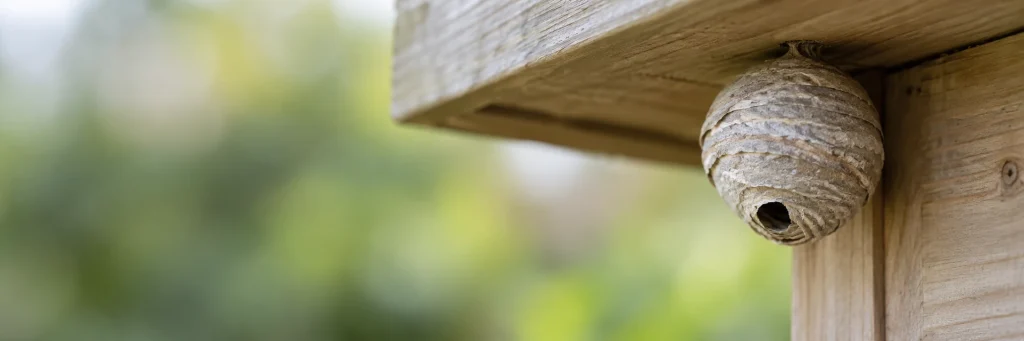
Found something that looks like honeycomb in your loft, shed or roof space? It is easy to assume bees made it. However, wasps also build nests containing rows of hexagonal cells, so the shape alone cannot tell you which insect you are dealing with.
The common social wasps found around homes make paper comb, not beeswax honeycomb. That distinction matters because a wasp colony and a honey bee colony need different approaches. Before disturbing anything, it helps to understand what the nest material, structure and insect activity can tell you.
Do wasps make honeycomb or something similar?
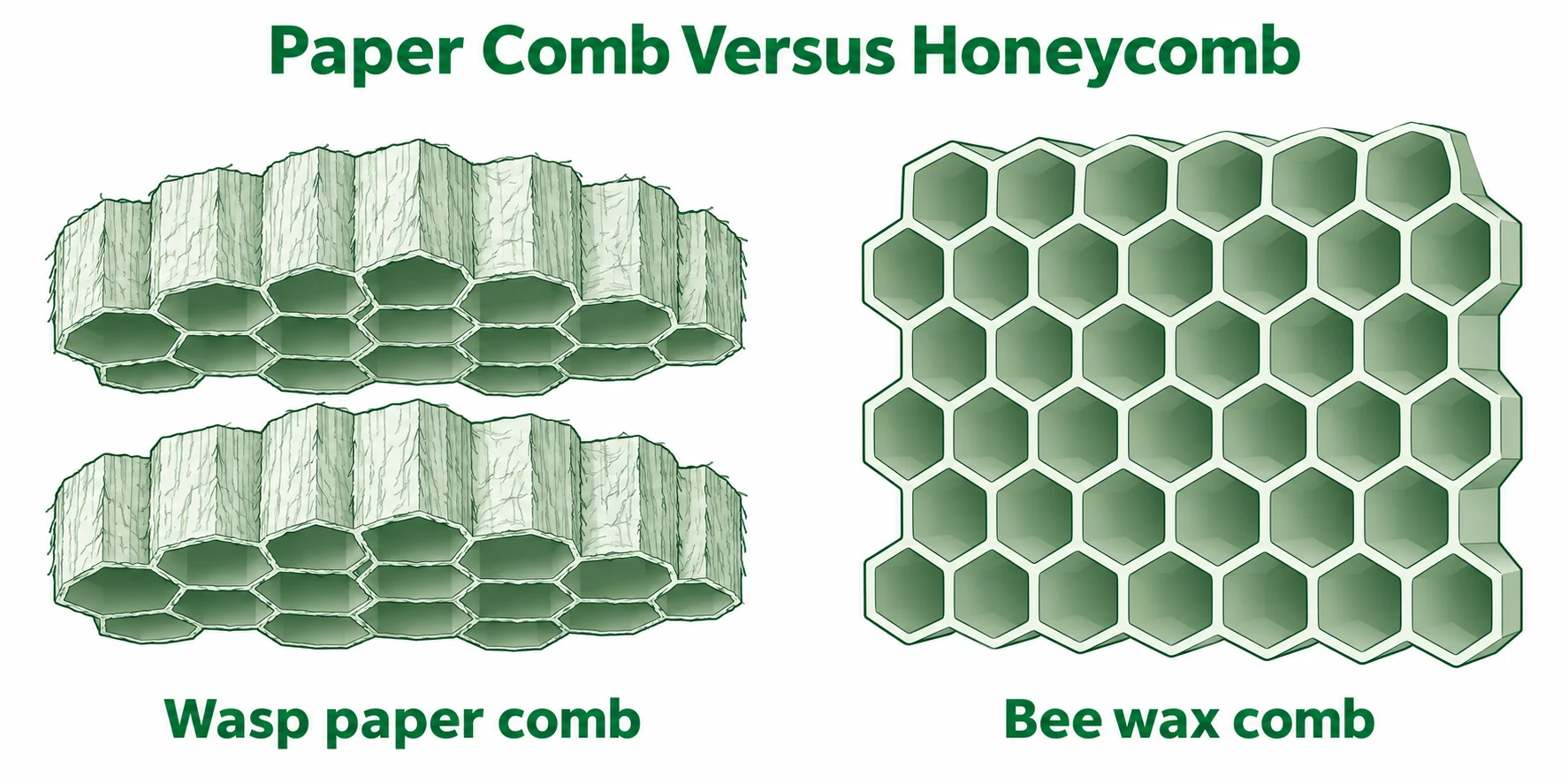
Common social wasps make comb, but it is not honeycomb. Their comb consists of adjoining cells made from chewed wood fibres mixed with saliva. These cells act as nursery spaces where the colony raises its young.
Honey bees build comb from wax they produce themselves. They use its cells for several purposes, including raising young and storing honey and pollen. This means even genuine beeswax comb is not necessarily full of honey.
The confusion comes from the shared cell shape. Hexagonal cells fit closely together, creating a compact structure with shared walls. Both insects use this arrangement, but the building material and purpose are different.
Adult wasps feed on sugary liquids, including nectar, while workers collect insects and other animal food for their larvae. Visiting flowers or gathering around sweet drinks does not mean they are making honey.
For a householder, the useful distinction is simple: paper nursery cells suggest a social wasp nest, while wax comb suggests honey bees. Neither should be handled to test the material, especially when insects are present.
What does the nest structure tell you?
A typical established social wasp nest contains layers of comb surrounded by a protective paper envelope. If that outer covering becomes damaged, the cells inside may be exposed. This is often when someone first notices what they describe as honeycomb.
Honey bee nests usually contain hanging sheets of wax comb. Within a building cavity, these may be attached to structural surfaces and extend beyond the area visible through an opening. Seeing only a small section does not reveal the full size of the colony.
Bumblebee nests are different again. They tend to contain clusters of brood cells and wax pots rather than the regular hanging sheets associated with honey bees. Solitary bees and solitary wasps have other nesting habits, so not every nest fits the same pattern.
- Paper layers and enclosed tiers of cells can indicate social wasps.
- Hanging sheets of wax comb can indicate honey bees.
- A cluster of small wax structures may belong to bumblebees.
These are identification clues, not a reason to open a nest. Learn more about the differences between wasps and bees and further features that can help distinguish them.
How to check safely without disturbing the colony
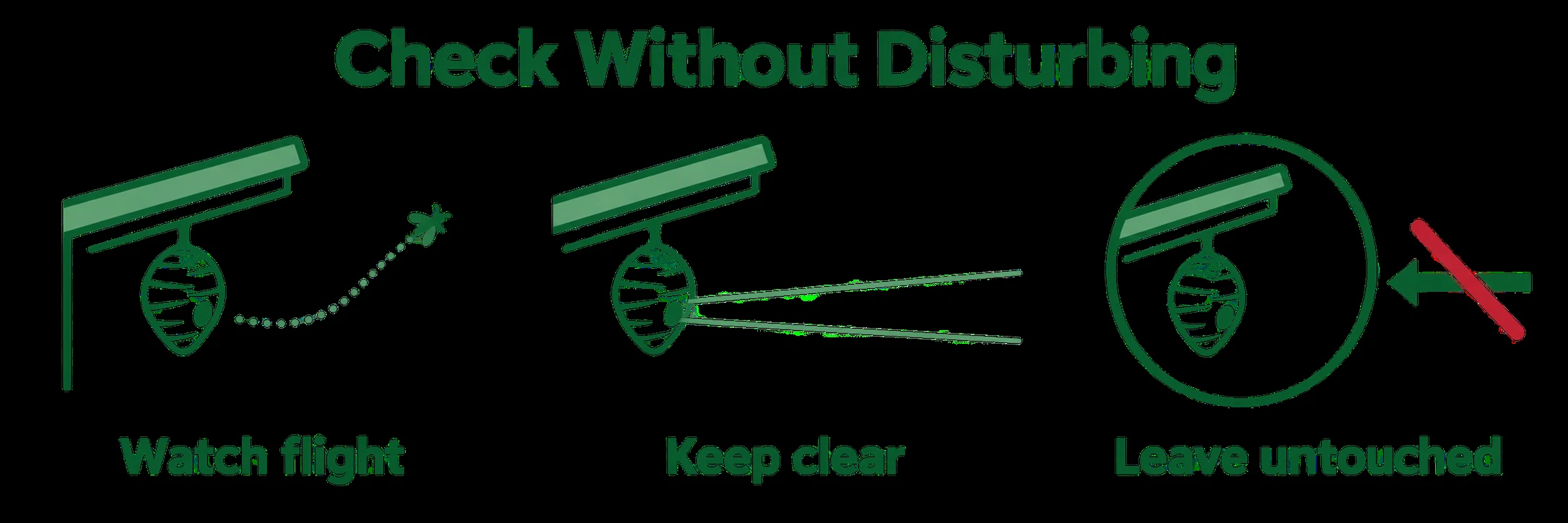
Start with observation from a safe distance. Look for repeated insect traffic to a particular gap in the roof, wall, shed or ground. A regular flight route can help a technician locate the entrance, even when the nest itself is hidden.
You do not need to get close enough to see individual cells. Useful information includes where insects are entering, whether they are appearing indoors and whether the entrance is near a doorway, seating area or place children use.
If you can take a photograph without approaching the entrance or entering an enclosed space with active insects, it may help with identification. Do not climb a ladder, lift roof tiles or move stored items just to get a better view.
- Keep children and pets away from the suspected nest.
- Avoid knocking, prodding or pulling at exposed material.
- Do not spray household products into the entrance.
- Leave entrance holes open until professionally assessed.
Blocking an active entrance can cause insects to seek another route, potentially into occupied rooms. If you find a nest during building work, stop disturbing that area and arrange an assessment before continuing.
Why identification changes the treatment plan
Correct identification comes before choosing a treatment. A professional assessment considers the insect, the location of the nest, access and the likelihood of people being stung. A colony away from everyday activity may sometimes be left undisturbed, while one beside a busy entrance needs closer attention.
For an active wasp nest requiring control, a technician selects a suitable treatment and explains any precautions. Treating the colony and physically removing its paper nest are separate tasks. Removal may not be necessary, and attempting it while wasps remain active can provoke defensive behaviour.
Honey bees require a different assessment. Depending on the circumstances, a beekeeper or specialist may be able to collect a swarm or relocate an established colony. A settled colony inside a building can involve wax comb, stored honey and access to a concealed cavity.
Where removal is needed, the plan should address remaining comb and honey, not just the visible bees. Residues can attract other insects and create further problems.
Find out how professionals deal with wasp nests and why inspection, treatment and any later removal must be considered separately.
What happens to the comb when the colony leaves?
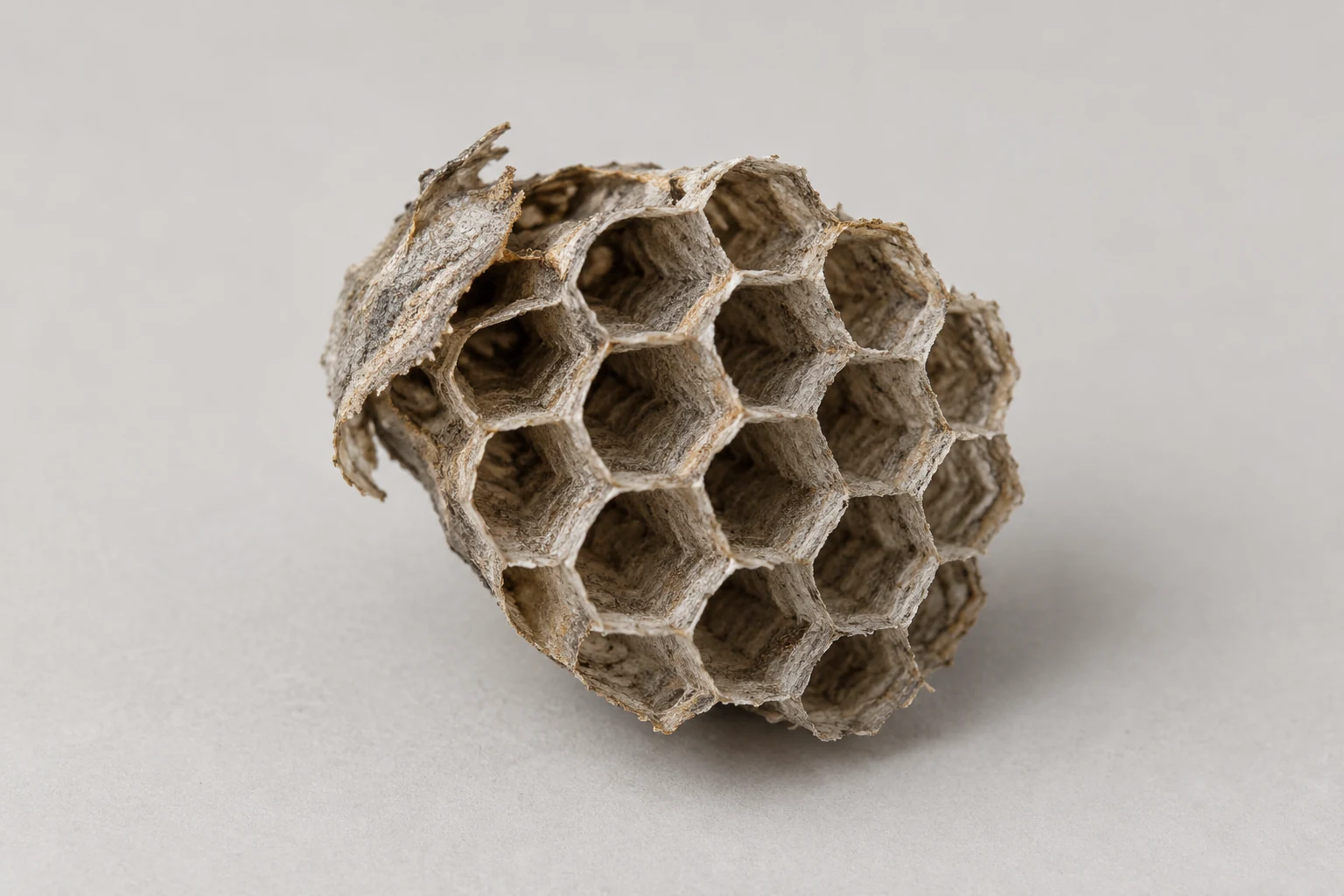
Common social wasp colonies follow an annual cycle. The old colony dies out as the season ends, while newly mated queens seek sheltered places to overwinter. These queens usually start fresh nests rather than moving back into an old paper nest.
However, finding dry paper comb does not prove that a nest is inactive. A quiet entrance during cool weather or a brief observation can be misleading. Nearby wasp activity may also come from another nest using the same roof space or outbuilding.
Honey bee colonies do not follow the same annual pattern. A healthy colony can remain in its nest through winter, living on stored food. Reduced flight activity is therefore not evidence that a honey bee nest has been abandoned.
Even apparently empty wax comb deserves assessment if it contains honey or sits inside a building cavity. Removing the visible portion may leave more material concealed behind it.
Once inactivity is confirmed and any necessary work is complete, suitable repairs can reduce future access. The timing matters: seal gaps after the colony has been dealt with, not while insects are still using them.
- Common social wasps make paper comb, not beeswax honeycomb.
- Hexagonal cells alone cannot identify the insect responsible.
- Do not disturb a nest or block an active entrance.
- Wasps, honey bees and bumblebees need different assessments.
- Quiet nest activity does not necessarily mean the colony has gone.
Frequently asked questions
Can you eat honey from a wasp nest?
A common social wasp nest is not a source of edible honey. Its paper cells are primarily used for raising young. Do not break open a nest looking for honey or taste unidentified material, particularly where pest treatment may have taken place.
Does exposed comb mean a nest is abandoned?
No. The outer covering of a wasp nest can be damaged while the colony remains active. Honey bee comb can also be exposed by building work. Keep your distance and have the activity assessed before touching or removing anything.
Is a cluster of bees always hiding honeycomb?
No. A newly arrived honey bee swarm may gather temporarily while searching for a nesting site, without having built comb there. An established colony is different. Avoid disturbing the cluster and seek advice on identification and suitable collection.
Does every wasp nest need removing?
Not necessarily. A nest away from people may be left alone if it presents little risk. Where control is appropriate, treatment does not always require physical nest removal. A technician can explain what is suitable for the location and activity.
Not sure what you have found?
Sykes Pest Control can help assess suspected nest activity and explain the next steps. Find out about our bee and wasp control services, and leave the nest undisturbed while you seek advice.