
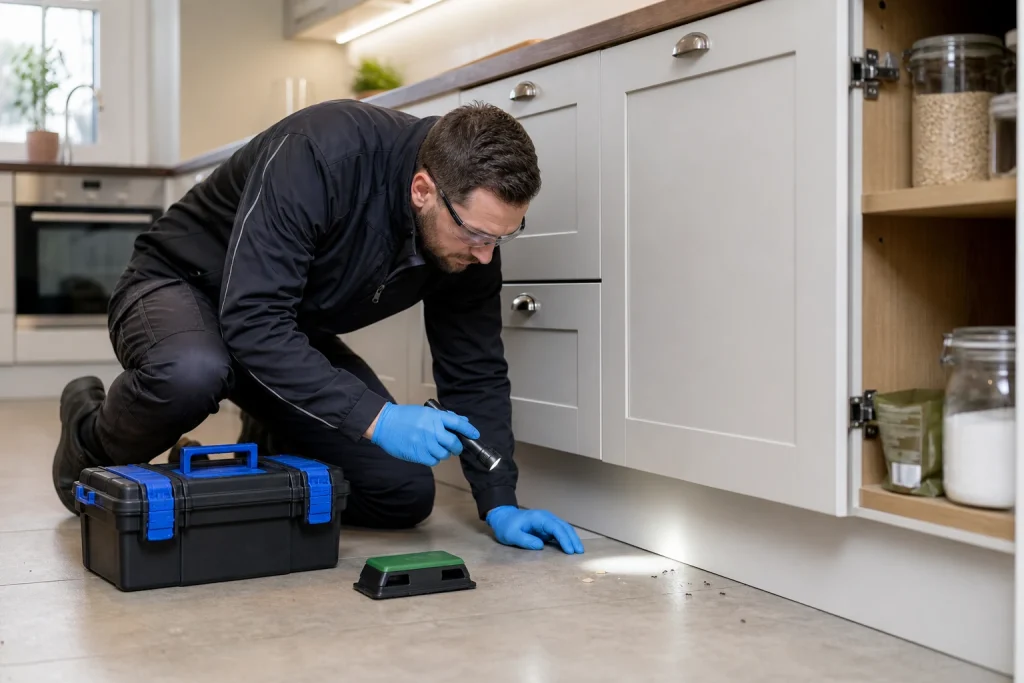
Finding ants marching across a kitchen worktop is unpleasant, especially when they are near food, pet bowls or children’s lunchboxes. It is also natural to wonder whether they are just a nuisance or a genuine health concern.
The reassuring answer is that most kitchen ants are not as hazardous as some pests, but they should not be ignored. The main issue is hygiene: where they have been, what they have walked through, and whether the problem keeps coming back.
Are kitchen ants actually dangerous?
Common household ants are not usually considered a major disease risk in the same way as some flying insects or cockroaches in kitchens. They do not normally bite people indoors, and a few ants spotted once may simply be foragers that have found a food source.
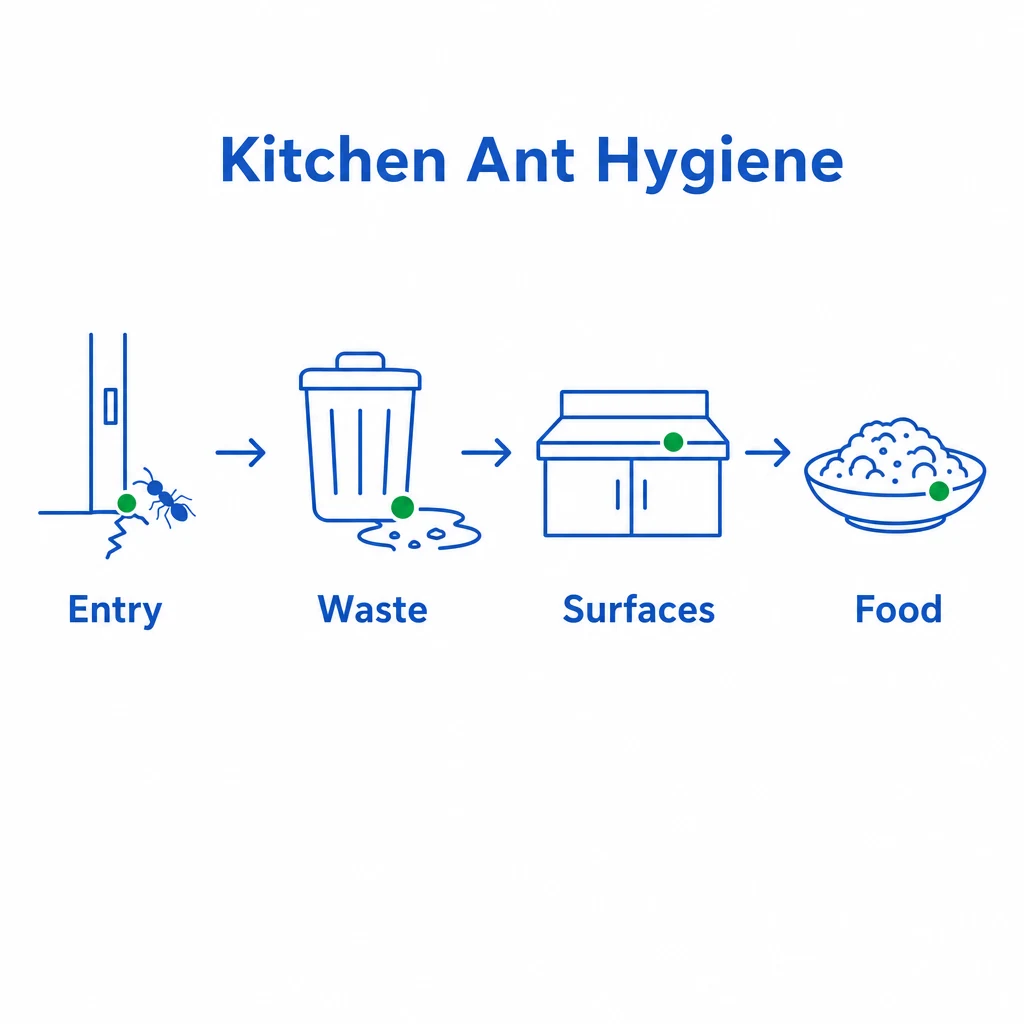
However, “not usually dangerous” does not mean “safe to leave”. Ants travel across floors, under units, around bins, through wall gaps and sometimes near drains before reaching your worktops or cupboards. If they then walk over bread, fruit, open packets or food preparation surfaces, they can transfer dirt and microbes mechanically.
For most healthy households this is a contamination concern rather than an emergency. The risk becomes more important where there are babies, elderly people, anyone with reduced immunity, or food prepared for customers, visitors or staff.
How ants can contaminate a kitchen
Ants are attracted to small amounts of food that are easy to miss: sugar granules, syrupy spills, crumbs behind the toaster, pet food residue, fruit juice under a highchair, or grease around a cooker. Once scouts find food, they lay a scent trail that other ants follow. This is why a handful of ants can quickly become a steady line.
The hygiene issue comes from contact. Ants may move between outdoor soil, waste areas, damp voids, skirting boards and food surfaces. They can also get into open packets, cereal boxes, biscuit tins and poorly sealed dry goods. Even if the food looks fine, it is sensible to throw away anything that ants have clearly entered.
They may also encourage over-use of DIY sprays in food areas. Spraying worktops, cupboards or skirting boards without reading labels carefully can create its own hygiene problem. Cleaning and exclusion are usually safer first steps than repeatedly applying insecticide around food.
What to do straight away if you find ants near food
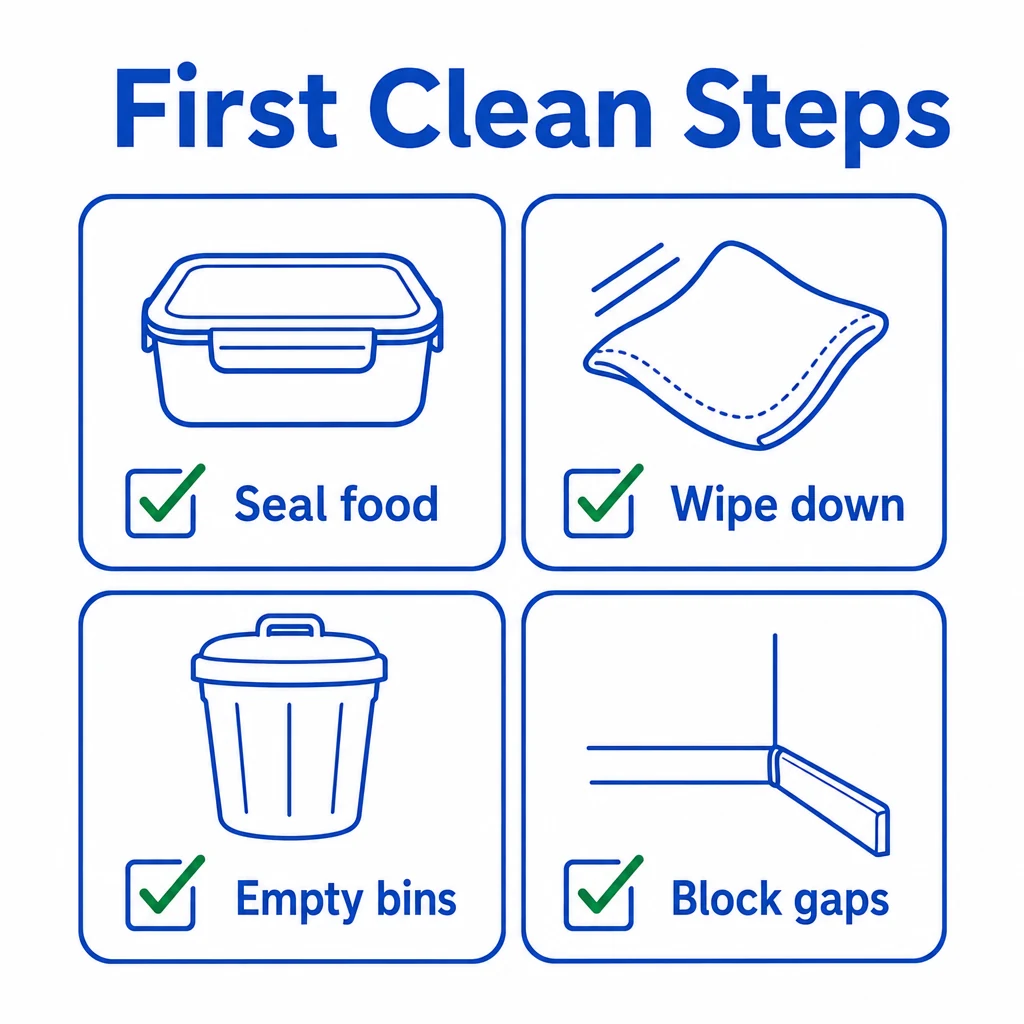
Start with practical hygiene measures. Remove any food the ants have reached, wipe the trail with warm soapy water, and clean surfaces before preparing food again. Pay close attention to the edge of worktops, cupboard joins, kickboards and the gap behind small appliances.
- Seal sugar, cereals, pet food and baking ingredients in lidded containers.
- Empty kitchen bins regularly and clean sticky residue from lids and liners.
- Rinse bottles, jars and recycling before storing them indoors.
- Move pet bowls after feeding and wipe the surrounding floor.
- Look for entry points around pipes, doors, vents, cracks and damaged seals.
If you can see where ants are entering, blocking small gaps may help, but avoid sealing them inside wall voids without understanding the route. If ants keep appearing from several places, the nest or trail may be more established than it first looks.
When an ant problem needs professional control
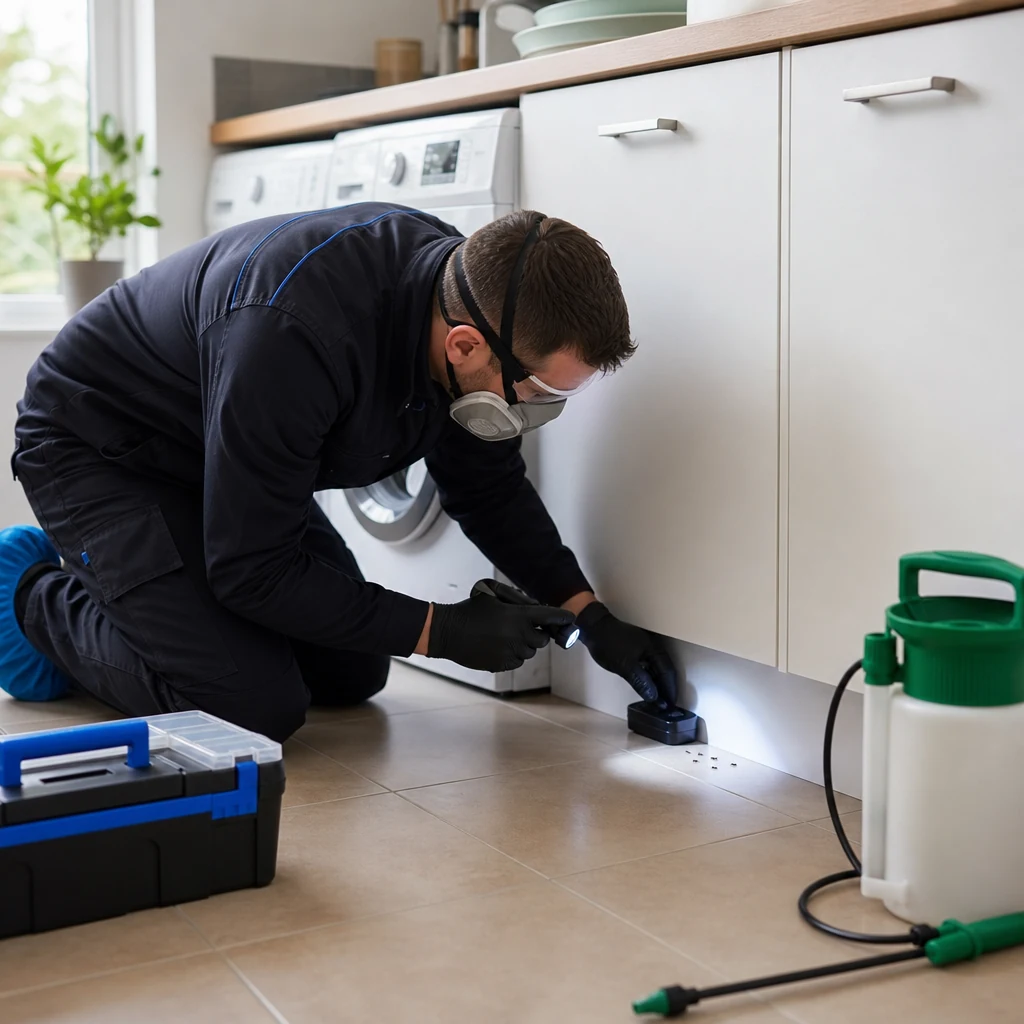
Professional control is worth considering when ants return after thorough cleaning, appear daily, enter food cupboards, or spread into more than one room. It is also sensible for food businesses, shared buildings, rented properties, nurseries, care settings, or homes where vulnerable people live.
A technician will usually look for the species, entry routes, food sources and the likely nest location before recommending treatment. This matters because visible ants are often only the foragers. Treating the wrong area may disturb them without solving the source of the problem.
Professional ant control may involve targeted gel baits, residual treatments in suitable areas, proofing advice and follow-up guidance on housekeeping. The aim is not just to kill the ants you can see, but to reduce the colony activity and stop the kitchen being attractive to new foragers.
If ants are appearing alongside flies or other crawling insects, our flies and ants pest control service explains how these issues can be assessed and treated in domestic and small commercial settings.
Could it be another pest instead?
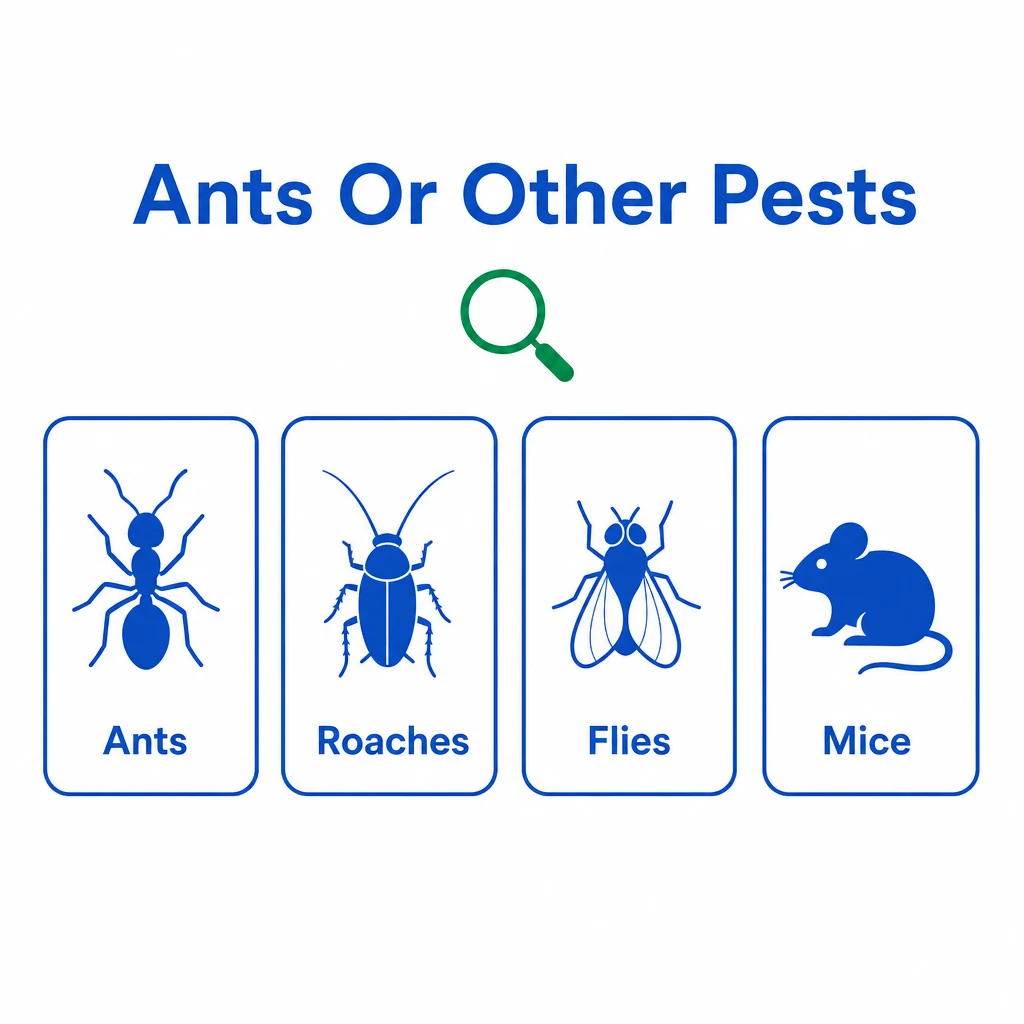
Not every small insect in a kitchen is an ant. Young cockroaches, stored product insects and beetles can sometimes be mistaken for ants at a glance, especially when seen briefly near cupboards or appliances. Correct identification is important because the hygiene risk and treatment approach can be very different.
Ants usually have a narrow waist, bent antennae and often move in trails. Cockroach nymphs are flatter, faster and tend to hide when disturbed. Tiny beetles may be found inside dried foods, while fabric pests are more likely around wool, natural fibres and undisturbed storage areas. If you are seeing damage to clothing, carpets or soft furnishings, information on carpet beetles and moths may be more relevant.
If you are unsure, take a clear photo, note where the insects appear, and avoid applying random treatments until the pest has been identified.
- Most kitchen ants are not highly dangerous, but they can contaminate food and surfaces.
- Throw away food that ants have entered and clean scent trails with warm soapy water.
- Persistent trails, cupboard activity or repeated sightings suggest a more established problem.
- Professional control is best when cleaning and proofing do not stop the ants returning.
Frequently asked questions
Can I eat food that ants have walked over?
It is safest not to eat food that ants have clearly crawled through or entered, especially open packets, fruit, bread or uncovered leftovers. Clean the area before preparing more food.
Do ants in the kitchen mean my home is dirty?
No. Ants can enter clean homes if they find water, warmth or a small food source. Good cleaning helps, but persistent activity often depends on entry routes and nest location.
Will vinegar or lemon juice get rid of ants?
They may disrupt scent trails temporarily, but they rarely solve an established nest. Use them as part of cleaning, not as a complete control method.
When should I stop using DIY ant products?
Stop if ants keep returning, spread to new areas, or appear near food storage. A professional inspection can identify the source and recommend a safer targeted approach.
Need help with ants in your kitchen?
If ants keep returning despite careful cleaning, Sykes Pest Control can inspect the problem and recommend a practical treatment plan.